
Showing posts with label 19th century England. Show all posts
Showing posts with label 19th century England. Show all posts
Tuesday, September 2, 2025
The Steam Whistle Theatre Company by Vivian French – 15/20 Books of Summer
The Pringle Players are down on their luck and decide to head north from London for new opportunities. Inspired by the train that will take them to the small market town of Uncaster, Pa Pringle gives the theatrical troupe a new name for their new venture: The Steam Whistle Theatre Company.


Sunday, October 22, 2023
The Nonesuch by Georgette Heyer, for the #1962Club
Title: The Nonesuch
Author: Georgette Heyer
Publication: E.P. Dutton & Co., hardcover, 1962
Genre: Historical Romance
Setting: 19th century England
 Description: Local society in the village of Oversett, North Yorkshire, is excited to hear that Sir Waldo Hawkridge, a dashing and wealthy member of the ton, has inherited Broom Hall and has come to see it with his amiable young cousin, Lord Lindeth. Tiffany Wield, a lovely heiress of 17 longing to enter London society, is determined to captivate them both.
Author: Georgette Heyer
Publication: E.P. Dutton & Co., hardcover, 1962
Genre: Historical Romance
Setting: 19th century England
Sunday, August 20, 2023
A Lady’s Guide to Scandal by Sophie Irwin
Title: A Lady’s Guide to Scandal
Author: Sophie Irwin
Publication: Penguin, trade paperback, 2023
Genre: Historical Romance
Setting: 19th century England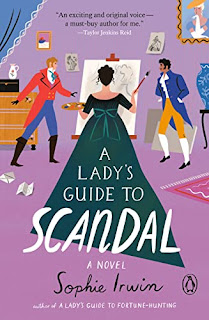 Description: Ten years ago, Eliza Balfour, a quiet seventeen-year-old, was bullied by her parents into marrying an earl 25 years her senior, although she loved his nephew, Oliver Courtenay.
Author: Sophie Irwin
Publication: Penguin, trade paperback, 2023
Genre: Historical Romance
Setting: 19th century England

Monday, July 17, 2023
Middlemarch by George Eliot
Title: Middlemarch
Author: George Eliot
Publication: 1871
Genre: Historical Fiction
Setting: English Midlands, 1829-32 Description: Middlemarch is the story of a country neighborhood, two women who live there, and their marriages. Most prominent is Dorothea Brooke, an intense and idealistic young woman, brought up with her sister Celia by their uncle since they were orphaned some seven years ago.
Author: George Eliot
Publication: 1871
Genre: Historical Fiction
Setting: English Midlands, 1829-32

Saturday, July 15, 2023
The Unknown Ajax by Georgette Heyer - one of her most amusing
Title: The Unknown Ajax
Author: Georgette Heyer
Publication: Ace paperback, originally published in 1959
Genre: Historical Romance/Regency
Setting: England, 1817 Description: The Darracott family is astonished to learn that cantankerous Lord Darracott’s heir is not his third son Matthew, but a grandson they never knew existed, Hugo.
Author: Georgette Heyer
Publication: Ace paperback, originally published in 1959
Genre: Historical Romance/Regency
Setting: England, 1817
Monday, April 10, 2023
The Corinthian by Georgette Heyer – for the #1940Club
Title: The Corinthian
Author: Georgette Heyer
Publication: Bantam, paperback, originally published in 1940
Genre: Historical Romance
Setting: 19th century England
It’s time for the #1940 Club, hosted by Simon from Stuck in a Book and Karen from Kaggsy’s Bookish Ramblings, featuring books published in a particular year.

Author: Georgette Heyer
Publication: Bantam, paperback, originally published in 1940
Genre: Historical Romance
Setting: 19th century England
It’s time for the #1940 Club, hosted by Simon from Stuck in a Book and Karen from Kaggsy’s Bookish Ramblings, featuring books published in a particular year.
Monday, August 15, 2022
Miss Austen – historical fiction by Gill Hornby
Title: Miss Austen
Author: Gill Hornby
Publication: Flatiron Books, hardcover, 2020
Genre: Historical Fiction
Setting: 19th-century England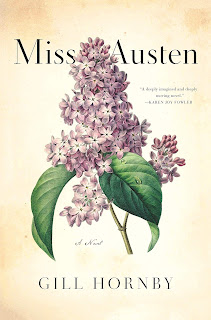 Description: In this historical novel set in 1840, Hornby imagines a purposeful visit paid by Cassandra Austen to Kintbury in Berkshire after the deaths of Eliza and Fulwar Fowle.
Author: Gill Hornby
Publication: Flatiron Books, hardcover, 2020
Genre: Historical Fiction
Setting: 19th-century England

Tuesday, August 18, 2020
Wives and Daughters by Elizabeth Gaskell
Title: Wives and Daughters
Author: Elizabeth Gaskell, called The Unjustly Overlooked Victorian Novelist by the New Yorker
Author: Elizabeth Gaskell, called The Unjustly Overlooked Victorian Novelist by the New Yorker
Setting: 1830s England
Publication: Oxford University Press, trade paper, 1987 (originally published 1864-66 in serial form)
Genre: Literature

Thursday, March 26, 2020
More Frederica, Chapters 22 - 28 (including Conclusion)
When we left Frederica, in the eponymous book by Georgette Heyer, the heroine's youngest brother Felix had stowed away in a hot air balloon and come to grief when the balloon descended into a tree. Frederica asked Lord Alverstoke to pursue the balloon and he is now in charge of the injured Felix at a farm outside London.
 Chapter 22
Alverstoke’s night at the farm minding Felix is very stressful. At least grumpy Miss Judbrook feeds him quite adequately but Felix tosses and turns all night, feverishly moaning or calling out for Frederica. My favorite bit is when he wakes up and asks where he is, and Alverstoke replies, “You are with me, Felix,” which he knows is silly when he utters it, but Felix is comforted.

Alverstoke’s night at the farm minding Felix is very stressful. At least grumpy Miss Judbrook feeds him quite adequately but Felix tosses and turns all night, feverishly moaning or calling out for Frederica. My favorite bit is when he wakes up and asks where he is, and Alverstoke replies, “You are with me, Felix,” which he knows is silly when he utters it, but Felix is comforted.
Friday, June 28, 2019
Frederica by Georgette Heyer - Chapters 11-13
In which the Merrivilles please the ton, and Alverstoke’s friendship with Frederica deepens
Chapter 11
Charis is a huge success at the ball. She is asked for every dance and, properly, won’t stand up with anyone more than twice. However, Endymion who was immediately smitten, asks for two dances and escorts her to supper. He is slightly outmaneuvered by a fellow officer, Lord Wrenthorpe, who is escorting Chloe and wants to make a party of four. Endymion loses his tête-à-tête with Charis and has to dash to find Frederica who is with Lady Jevington’s son Gregory, another “cousin”. We also learn that Mrs. Dauntry introduced Charis to Lord Wrenthorpe – she has already noticed her son’s infatuation, disapproves, and is trying to distract Charis.

Although the ball is magnificent and everyone who is anyone is there, Lady Buxted is infuriated that Alverstoke did it to launch the Merrivilles and that rival hostesses are urging her to bring them to their festivities. Lady Jersey promises vouchers for Almack’s for the Merrivilles and oh-so-sweetly includes Jane as well. Just as we saw Lady Jersey in the previous chapter complain about Louisa and Augusta snubbing her when she was their younger sister’s friend, Louisa remembers it differently:
After the ball, many of their new friends call on the Merrivilles at Upper Wimpole Street: Lord Buxted, Endymion, and even Lady Jersey makes a courtesy call, which she almost regrets. Luckily, she decides to be charmed by Miss Winsham’s eccentricity, and her approval helps establish the Merrivilles in society. Miss Winsham is made much of when she escorts the young ladies to Almack’s but she does not appreciate the attention, and afterwards is happy to delegate their chaperonage to Lady Buxted or Mrs. Dauntry. Neither of those ladies is thrilled with the Merrivilles but can’t show it because each needs Alverstoke to pay her bills. Lady Buxted is jealous of their popularity but doesn’t think her son could be seriously interested in Frederica, while Mrs. Dauntry is worried about Endymion’s infatuation with Charis, which includes escorting Chloe to spend time with her new friend. Lady Buxted spitefully tells everyone that the Merrivilles have no fortune, hoping to spoil their chances, while Mrs. Dauntry, craftier, tries to introduce Charis to any possible prospect that isn’t her son. She is so preoccupied with Charis that she does not notice Chloe and Charles Trevor becoming close. The ton ignores Lady Buxted and observes Mrs. Dauntry’s hints about the family estates in Herefordshire, so there is a growing sense that the Merrivilles are better dowered than they are.

Chapter 11
Charis is a huge success at the ball. She is asked for every dance and, properly, won’t stand up with anyone more than twice. However, Endymion who was immediately smitten, asks for two dances and escorts her to supper. He is slightly outmaneuvered by a fellow officer, Lord Wrenthorpe, who is escorting Chloe and wants to make a party of four. Endymion loses his tête-à-tête with Charis and has to dash to find Frederica who is with Lady Jevington’s son Gregory, another “cousin”. We also learn that Mrs. Dauntry introduced Charis to Lord Wrenthorpe – she has already noticed her son’s infatuation, disapproves, and is trying to distract Charis.
Although the ball is magnificent and everyone who is anyone is there, Lady Buxted is infuriated that Alverstoke did it to launch the Merrivilles and that rival hostesses are urging her to bring them to their festivities. Lady Jersey promises vouchers for Almack’s for the Merrivilles and oh-so-sweetly includes Jane as well. Just as we saw Lady Jersey in the previous chapter complain about Louisa and Augusta snubbing her when she was their younger sister’s friend, Louisa remembers it differently:
When Lady Buxted remembered impertinent little Sally Fane, a wretched schoolroom-miss to whom she had administered a number of well deserved set-downs, the delicacies her brother’s French cook had prepared for the refreshment of his guests tasted like ashes in her mouth.
Alverstoke does not dance with his wards but does ask Frederica if she is satisfied. She tells him she is delighted by Charis’ success, and he is amused that she spares no thought for herself. Although Frederica assumes anyone being nice to her is hoping to get close to Charis, she does not realize two of the guests prefer her – Lord Buxted and Darcy Moreton, Alverstoke’s oldest friend. In fact, Mr. Moreton quizzes Alverstoke on his real motives for taking the Merrivilles under his wing and says “[t]he elder sister’s the filly for my money.” Alverstoke admits he did it to annoy Louisa.
After the ball, many of their new friends call on the Merrivilles at Upper Wimpole Street: Lord Buxted, Endymion, and even Lady Jersey makes a courtesy call, which she almost regrets. Luckily, she decides to be charmed by Miss Winsham’s eccentricity, and her approval helps establish the Merrivilles in society. Miss Winsham is made much of when she escorts the young ladies to Almack’s but she does not appreciate the attention, and afterwards is happy to delegate their chaperonage to Lady Buxted or Mrs. Dauntry. Neither of those ladies is thrilled with the Merrivilles but can’t show it because each needs Alverstoke to pay her bills. Lady Buxted is jealous of their popularity but doesn’t think her son could be seriously interested in Frederica, while Mrs. Dauntry is worried about Endymion’s infatuation with Charis, which includes escorting Chloe to spend time with her new friend. Lady Buxted spitefully tells everyone that the Merrivilles have no fortune, hoping to spoil their chances, while Mrs. Dauntry, craftier, tries to introduce Charis to any possible prospect that isn’t her son. She is so preoccupied with Charis that she does not notice Chloe and Charles Trevor becoming close. The ton ignores Lady Buxted and observes Mrs. Dauntry’s hints about the family estates in Herefordshire, so there is a growing sense that the Merrivilles are better dowered than they are.
Chapter 12
Frederica begins to hear rumors about her and Charis’ alleged fortunes, and she is concerned about the misrepresentation and worried Alverstoke is responsible. She asks him – after he has taken Jessamy for a ride with the grays and complimented the boy on his skill – and he denies it but is amused, especially when he hears Mrs. Dauntry has been introducing Charis to some questionable prospects.
Meeting her enquiring look, he said, “Who would have thought that your adoption of me would have provided me with so much entertainment?”
“You did!” responded Frederica unhesitatingly. “I didn’t know it at the outset, but I am very sure now that you adopted us merely to infuriate Lady Buxted!”
“And can you blame me?”
An involuntary chuckle escaped her. “Well, perhaps not as much as I ought! But you did think it might amuse you!”
“True – and so it did!”
Alverstoke and Frederica confer about some of Charis’ would-be beaux and Alverstoke says he will take them driving in the park to send a quelling message to inappropriate suitors. Frederica says he doesn’t need to include her but she is grateful for the attention to Charis:
She tried, unsuccessfully, to repress a mischievous chuckle, and added, with disarming candour, “You can’t think how much against the pluck it goes with me to administer to your vanity, cousin, but I haven’t spent all these weeks in London without realizing that your consequence is enormous!”
“Viper!” said his lordship appreciatively. “I will endure the company of your beautiful but bird-witted sister, but on the condition that the tedium of these sessions will be relieved occasionally by your astringent quality."
Alverstoke reveals he has heard the rumors about Endymion’s passion for Charis, and Frederica reveals that Lord Buxted prefers her. Alverstoke says this improves his opinion of Buxted. Felix bursts in on their conversation to beg Alverstoke to take him to the New Mint. Alverstoke says Charles Trevor deserve this treat and it is revealed that Mr. Trevor has been coming to the Merrivilles’ informal Sunday night suppers. Puzzled, Alverstoke asks Frederica if Charles is pursuing Charis too; she says no and is too discreet to reveal the truth, but Alverstoke guesses that Charles is interested in Chloe Dauntry.

Chapter 13
Alverstoke demonstrates his active support of the Merrivilles by taking Charis driving in Hyde Park where they can be seen by the ton. Unfortunately, although Charis has lovely manners and impresses him by her lack of coquetry to the admirers they encounter, she is not a great conversationalist and he is bored. He politely asks her to drive out again and she surprises him by asking if he would take the whole family to visit my favorite place in England, Hampton Court! Everyone enjoys this expedition, especially the boys and Charis who get lost in the maze, while Alverstoke (who somehow in pre-internet 19th century acquires the key to the maze) guides himself and her out of it. She teases him about not taking his own nephews and nieces on such excursions and he says that would have bored him.
“But why didn’t you send [Charles Trevor] to escort us today?” she asked, in an innocent tone at variance with the mischief in her eyes. “You cannot have supposed that such an expedition as this wouldn’t bore you quite as much as the Mint!”
He glanced down at her, half smiling, but with an oddly arrested expression in his face.
She was puzzled by it, but after a minute, she said quizzically: “Are you wondering if you can bamboozle me into believing you won’t entrust your team to Mr. Trevor?”
“No,” he replied slowly, “though it would be true! I was thinking how well that bonnet becomes you.”
They continue to joke until he asks her gently if she thinks Charis really wants the future Frederica seeks for her. This distresses Frederica. She explains that she doesn’t want a brilliant match for Charis, just an eligible husband who can provide the “elegancies of life.” Alverstoke points out that Charis prefers the country to town which surprises and worries her sister. She says she only wants Charis to be happy but the girl is so persuadable and falls in love so often she did not want Charis to throw herself away on someone in the country without ever having seen a wider range of suitors. Frederica admits she doesn’t always understand her sister because she has never fallen in love herself, which astounds Alverstoke. She tells him she is four-and-twenty and happy to be on the shelf, taking care of the family. She says his reputation doesn’t reflect his kindness to her family, and asks what he thinks about an older gentleman in his 40s for Charis but Alverstoke says the man sounds too dull and wonders why she is so well disposed towards him.
“I was beginning to think you had a tendre for this paragon yourself, and that would never do: you wouldn’t suit, believe me.”
“Readily!” she said, laughing. “So perhaps I won’t, after all, try to cut Charis out! As if I could!”
“I can think of more unlikely contingencies,” he said.
"Can you indeed? Then either you must be all about in your head, or a bigger humbug than I am!” she said roundly.
Questions:
Is this conversation between Alverstoke and Frederica what is sometimes called a recognition scene – on his part, at least? Certainly, Alverstoke enjoys Frederica’s easy conversation and lack of awe around him (no one else teases him). I don’t think he is in love with her yet but he does recognize something special about her.
These chapters are also important because they show the way the ton embraces the Merrivilles (whatever their finances) but Alverstoke realizes before Frederica that Charis enjoys parties but doesn’t really like being the center of attention. Charis tells him the country is nicer because people don’t stare. For those down on Frederica, let me point out that she is distressed at his suggestion the season for Charis was not what her sister wanted. She just wants Charis not to have to pinch and scrape if she marries someone of modest means and hitherto, it is implied, Charis fell in and out of love readily.
Should Frederica have been spurred to have a serious talk with Charis after she has this conversation with Alverstoke?
Sunday, June 23, 2019
Frederica - Chapters 9 and 10
In which Frederica and Charis prepare for the ball, then attend a pre-ball dinner party at Alverstoke House with many new “relatives”
Chapter 9
While the Marquis is enjoying the races at Newmarket, the Merriville ladies are preparing for the ball while Felix gets into trouble by taking a steamboat to Margate without permission (where he makes friends with the crew and spends the night aboard before being returned to Frederica the next day). Afterwards, Frederica asks Jessamy to keep an eye on him so for a while they spend time exploring London and having a great time. When Jessamy wonders if he has been leading Felix into bad ways, Frederica calms him down and also asks him not to encourage their neighbor, Mr. Nutley, in his infatuation with Charis.
 |
| This cover is dreadful |
While the Marquis is enjoying the races at Newmarket, the Merriville ladies are preparing for the ball while Felix gets into trouble by taking a steamboat to Margate without permission (where he makes friends with the crew and spends the night aboard before being returned to Frederica the next day). Afterwards, Frederica asks Jessamy to keep an eye on him so for a while they spend time exploring London and having a great time. When Jessamy wonders if he has been leading Felix into bad ways, Frederica calms him down and also asks him not to encourage their neighbor, Mr. Nutley, in his infatuation with Charis.
“. . . it would not do to become intimate with that family , or with their friends. To be plain with you, Jessamy, they may be good, worthy people, but they aren’t up to the rig! Mrs. Nutley’s patronage cannot give us consequence – in fact, it would be excessively harmful! Her manners, you not, are not distinguished, and, from what Buddle tells me, Mr. Nutley is a very ungenteel person.”
“Buddle!” he ejaculated.
She smiled, “My dear, if Budddle holds up his nose you may depend upon it he is right! Papa once told me that a good butler may be trusted to smell out a commoner in the twinkling of a bedpost! Young Mr. Nutley, I own, has more polish than his parents, but he’s an April-squire, Jessamy!”
Thursday, November 2, 2017
Cousin Kate (Book Review) #1968Club
What is the 1968 Club, you ask? It is a year mostly remembered for tragedy. Simon from Stuck in a Book chose a year, 1968, and has encouraged other bloggers to read up and post on books published that year for the #1968 Club. This is a fun way to be exposed to a lot of interesting books, some of which I have heard of and some not. The last time I participated it was 1951 and I reread All-of-A-Kind Family.
 Title: Cousin Kate
Author: Georgette Heyer
Publication: Dutton Hardcover, 1968; my edition is a Bantam paperback
Genre: Historical Romance/Regency/Gothic

Author: Georgette Heyer
Publication: Dutton Hardcover, 1968; my edition is a Bantam paperback
Genre: Historical Romance/Regency/Gothic
Sunday, May 26, 2013
La Belle Dame Sans Merci - Keats Blog Tour
In the Georgette Heyer novels I love so much there are several mentions of the dangerous Lord Byron, but he had several contemporaries, known as the Romantic Poets, not all of whom had Byron’s entrée to ton society. One such was John Keats (1795-1821), humbly born, and orphaned relatively young. He took up medicine as a career, but his love of beauty and literature had found expression in poetry by his late adolescence. Inspired by Spenser’s Faerie Queen, he entered “a new world of bright colour and honied language, of romantic adventure and chivalric devotion far above the level of actual life,” according to one biographer, Aileen Ward, and wrote his first poem.
 Keats' first poem was published in 1816, and my favorite, La Belle Dame San Merci, was written in 1819, early in his sadly short career (just two years later, he died of tuberculosis, the family disease).
Tuesday, December 15, 2009
Cranford by Elizabeth Gaskell
Several years ago my friend Eileen Kendall, esteemed founder and patroness of the Georgette Heyer Discussion Group, recommended a new miniseries of North and South, based on Elizabeth Gaskell’s novel, which she said was nearly as good as the Firth/Ehle Pride and Prejudice. Although I am fairly well read in 19th century literature, I had somehow never read Gaskell and knew little about her. Handicapped by being in the middle of law school and prescribed by an upbringing that prohibits multimedia prior to one’s having read the book, I mentally put Gaskell aside for several years. Last winter my book group read North and South, which I greatly enjoyed, so when I learned about the Classics Circuit of Gaskell, I was excited to participate and chose Cranford so that I would finally be able to watch the PBS episodes languishing for many months on my DVR.# I read the Oxford University Press edition, because I had liked the introduction in North and South. Cranford is the story of a quiet English town around 1850, which consists primarily of worthy older ladies living in genteel poverty. As in many comedies of manners, their primary occupation is discussing each other. Cranford itself is viewed through the eyes of Mary Smith, a modest young lady who pays frequent visits to the Misses Jenkyns and who is not even identified by name until late in the book (leading me initially to wonder if Daphne du Maurier’s heroine in Rebecca was not the first nameless protagonist).
At first, I did not see the charm in Cranford, just the bleak existence of its primarily female inhabitants, and I wondered why Mary kept coming to visit the elderly Jenkyns sisters, stern Miss Deborah Jenkyns and her younger and more frivolous sister, Miss Matty.* However, as I continued to read and grow familiar with the cast of characters, I began to appreciate the idiosyncrasies of the Cranford ladies as they balance the demands of their society and its gentle entertainments with their limited financial resources - and ultimately reveal true friendship and loyalty beneath the tittle-tattle. As Mary’s father points out, “See, Mary, how a good innocent life makes friends all round.” While it does not possess the vivid characters and memorable romance of North and South, Cranford also provides unexpected humor to offset the pathos: my favorite is when Miss Matty’s maid, Martha, proposes to her gentleman follower, Jem, who is stunned and says, “[M]arriage nails a man, as one may say. I dare say I shan’t mind it after it’s over.”
Of particular interest to me was that, as with many books of this era, including many I have enjoyed in their Masterpiece Theatre incarnations, Cranford was written as a serialization. Gaskell’s first novel, Mary Barton, had brought her to the attention of Charles Dickens, who encouraged her to become a contributor to his periodical, Household Words. I enjoy imagining subscribers eagerly awaiting the next installment.
* Contemplating the economies of the Jenkyns household, which included a pretense that candles were not necessary, I began to worry again about the demise of my 401K although reading literature is supposed to provide an escape from such concerns!
Cranford is the story of a quiet English town around 1850, which consists primarily of worthy older ladies living in genteel poverty. As in many comedies of manners, their primary occupation is discussing each other. Cranford itself is viewed through the eyes of Mary Smith, a modest young lady who pays frequent visits to the Misses Jenkyns and who is not even identified by name until late in the book (leading me initially to wonder if Daphne du Maurier’s heroine in Rebecca was not the first nameless protagonist).At first, I did not see the charm in Cranford, just the bleak existence of its primarily female inhabitants, and I wondered why Mary kept coming to visit the elderly Jenkyns sisters, stern Miss Deborah Jenkyns and her younger and more frivolous sister, Miss Matty.* However, as I continued to read and grow familiar with the cast of characters, I began to appreciate the idiosyncrasies of the Cranford ladies as they balance the demands of their society and its gentle entertainments with their limited financial resources - and ultimately reveal true friendship and loyalty beneath the tittle-tattle. As Mary’s father points out, “See, Mary, how a good innocent life makes friends all round.” While it does not possess the vivid characters and memorable romance of North and South, Cranford also provides unexpected humor to offset the pathos: my favorite is when Miss Matty’s maid, Martha, proposes to her gentleman follower, Jem, who is stunned and says, “[M]arriage nails a man, as one may say. I dare say I shan’t mind it after it’s over.”
Of particular interest to me was that, as with many books of this era, including many I have enjoyed in their Masterpiece Theatre incarnations, Cranford was written as a serialization. Gaskell’s first novel, Mary Barton, had brought her to the attention of Charles Dickens, who encouraged her to become a contributor to his periodical, Household Words. I enjoy imagining subscribers eagerly awaiting the next installment.
Thank you for visiting my blog!
# In fact, this is very timely as PBS will air more Cranford episodes later this month.
* Contemplating the economies of the Jenkyns household, which included a pretense that candles were not necessary, I began to worry again about the demise of my 401K although reading literature is supposed to provide an escape from such concerns!
Subscribe to:
Posts (Atom)